
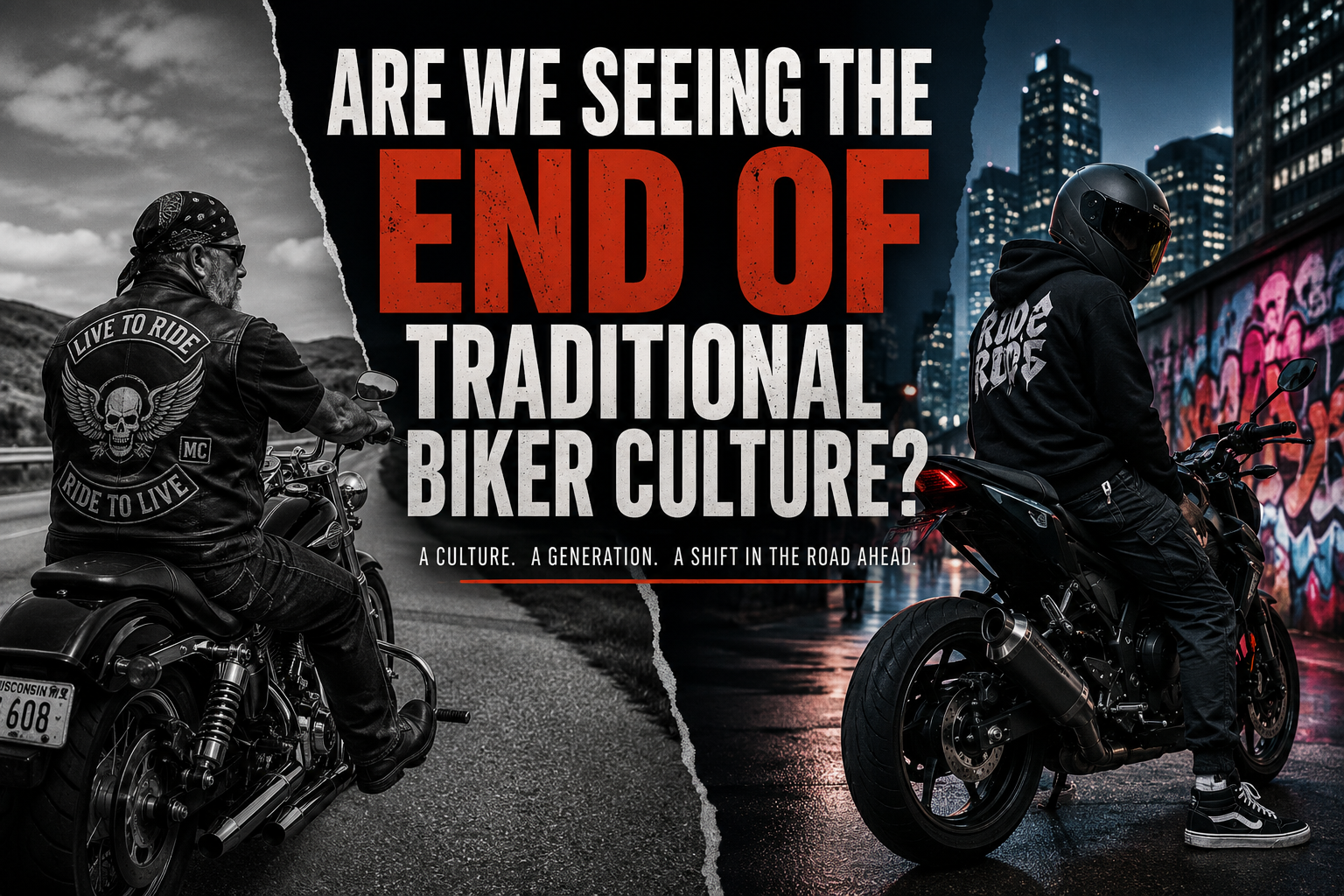
A Culture Built on Identity
Traditional biker culture has always been about more than motorcycles.
It’s been built around:
Community and brotherhood
Club-based riding and shared values
A strong, recognizable visual identity
From Harley-Davidson cruisers to leather jackets and club patches, the culture has remained consistent for decades. It represents a lifestyle as much as a mode of transport.
For many riders, that identity still defines what motorcycling is.
A New Generation of Riders
At the same time, a different type of rider is entering the scene.
In urban environments especially, motorcycles are increasingly used for:
Daily commuting
Short-distance riding
Practical transportation
Younger riders are often drawn in through more affordable, accessible bikes — a shift that aligns with broader changes across the industry (Source: Reuters).
Manufacturers are responding by focusing more on entry-level models, smaller displacement engines, and versatile platforms that fit into everyday life.
For this new generation, riding is less about long-distance touring — and more about integration into daily routines.
Style Is Changing — Fast
One of the most visible changes is how riders present themselves.
Where traditional biker culture emphasized leather, denim, and patches, many modern riders are now opting for:
Streetwear-inspired riding gear
Technical fabrics designed for mobility and comfort
Minimal, all-black or monochrome aesthetics
This shift is not just about fashion — it reflects a different approach to riding.
Motorcycles are no longer seen purely as weekend machines. They’re part of a broader lifestyle that blends mobility, identity, and personal style.
Social Media Is Reshaping the Culture
The rise of platforms like Instagram and TikTok has accelerated this transformation.
Motorcycle content today is:
Faster
More visual
More globally connected
Instead of long-form storytelling, the culture is now often expressed through:
Short, cinematic riding clips
Custom builds presented visually
Urban backdrops and night riding aesthetics
This has made motorcycle culture more accessible — but also more fragmented, with different styles and trends emerging simultaneously.
The Shift Toward Accessibility
Another key change is the growing emphasis on accessibility.
Motorcycles are becoming:
More affordable
Easier to enter for new riders
Less tied to a specific identity or subculture
This shift is particularly important for younger riders, who may not relate to traditional biker imagery but are still drawn to the experience of riding.
It also reflects broader economic and social changes, where flexibility and practicality are increasingly valued.
Evolution, Not Disappearance
Despite these changes, traditional biker culture is far from disappearing.
Clubs, rallies, and long-distance touring communities remain active and influential. Events continue to attract large crowds, and many riders still identify strongly with the classic image of motorcycling.
What’s changing is not the existence of that culture — but its position within a much larger and more diverse landscape.
A More Diverse Motorcycle World
Today’s motorcycle culture is no longer defined by a single identity.
Instead, it includes:
Traditional cruiser and touring riders
Urban commuters
Custom builders and garage scenes
Performance-focused and sport riders
Each group brings its own perspective, style, and priorities.
The result is a culture that is more open — but also less uniform than before.
What This Means Going Forward
As the industry continues to evolve, this diversification is likely to continue.
Manufacturers are adapting. Media is adapting. And riders themselves are redefining what the culture represents.
Rather than replacing traditional biker culture, these changes are expanding the space around it.
Final Thoughts
Motorcycle culture is not ending — it’s evolving.
The classic image of the biker still exists, but it now shares the stage with a new generation of riders who approach motorcycling differently.
In 2026, the culture is no longer defined by one look, one type of bike, or one way of riding.
And that shift may not signal the end of traditional biker culture — but the beginning of something broader.
Sources
Reuters — industry trends and shift toward new riders