
What’s Changing?
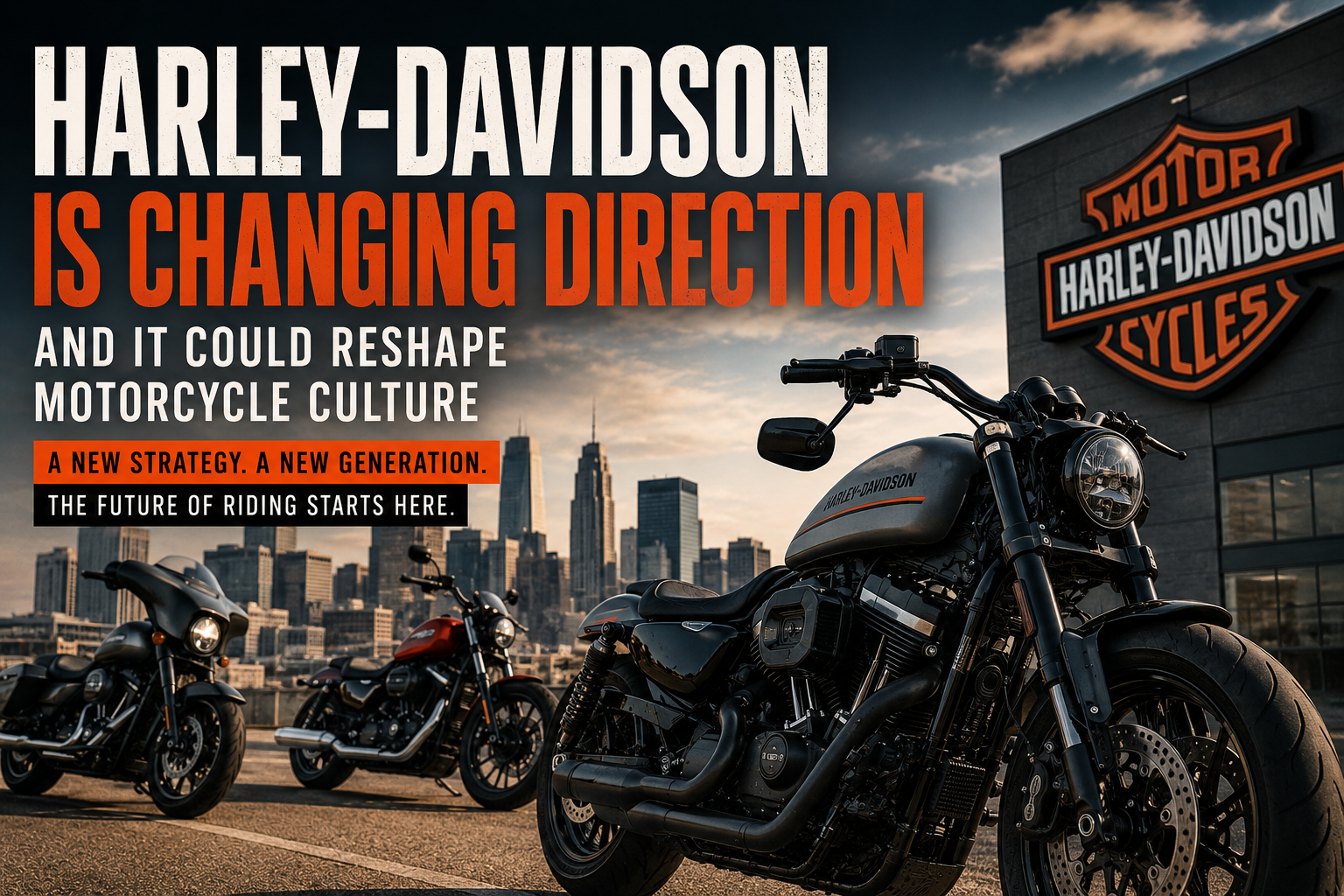
According to recent reports, Harley-Davidson plans to introduce lower-cost models aimed at entry-level riders, with pricing expected to start around $6,000. A redesigned Sportster platform is also expected to return at a more accessible price point (Source: Wall Street Journal).
The company is also investing in its dealer network and refining its product lineup in an effort to increase overall sales volume (Source: Reuters).
Why Now?
The shift comes as Harley-Davidson faces several challenges.
Recent financial reports indicate declining revenues and pressure from rising costs and tariffs. At the same time, the brand has struggled to attract younger riders, with its traditional customer base aging over time (Source: Reuters).
By lowering the barrier to entry, Harley-Davidson appears to be targeting a broader audience — particularly newer riders who may have been priced out of the brand in the past.
Early Signs of Change
There are early indications that the strategy may be gaining traction.
North American sales have recently increased, alongside modest global growth, suggesting renewed interest in the brand’s evolving lineup (Source: Barron’s).
While it remains too early to determine long-term success, the initial response points toward a potential shift in momentum.
What This Means for Motorcycle Culture
Beyond business strategy, Harley-Davidson’s shift could have wider implications for motorcycle culture.
For decades, the brand has been closely associated with heavyweight touring bikes and a premium image. A move toward more accessible models may signal a broader change in how motorcycles are positioned — from luxury products to everyday machines.
This could lead to:
A younger, more diverse rider base
Increased participation in urban and casual riding
Greater crossover with lifestyle and streetwear culture
A Changing Industry
Harley-Davidson is not alone in adapting to a changing market.
Across the industry, manufacturers are exploring:
Smaller displacement bikes
Electric motorcycles
More versatile, affordable platforms
These trends reflect shifting consumer preferences, particularly among younger riders seeking flexibility and practicality.
Final Thoughts
Harley-Davidson’s new direction represents more than a business decision — it reflects a broader evolution in the motorcycle world.
Whether the strategy succeeds will depend on execution and market response. But one thing is clear:
The future of motorcycling may be less about exclusivity — and more about accessibility.
Sources
Reuters — Harley-Davidson strategy and financial outlook
Wall Street Journal — new affordable model plans
Barron’s — sales performance and market response