
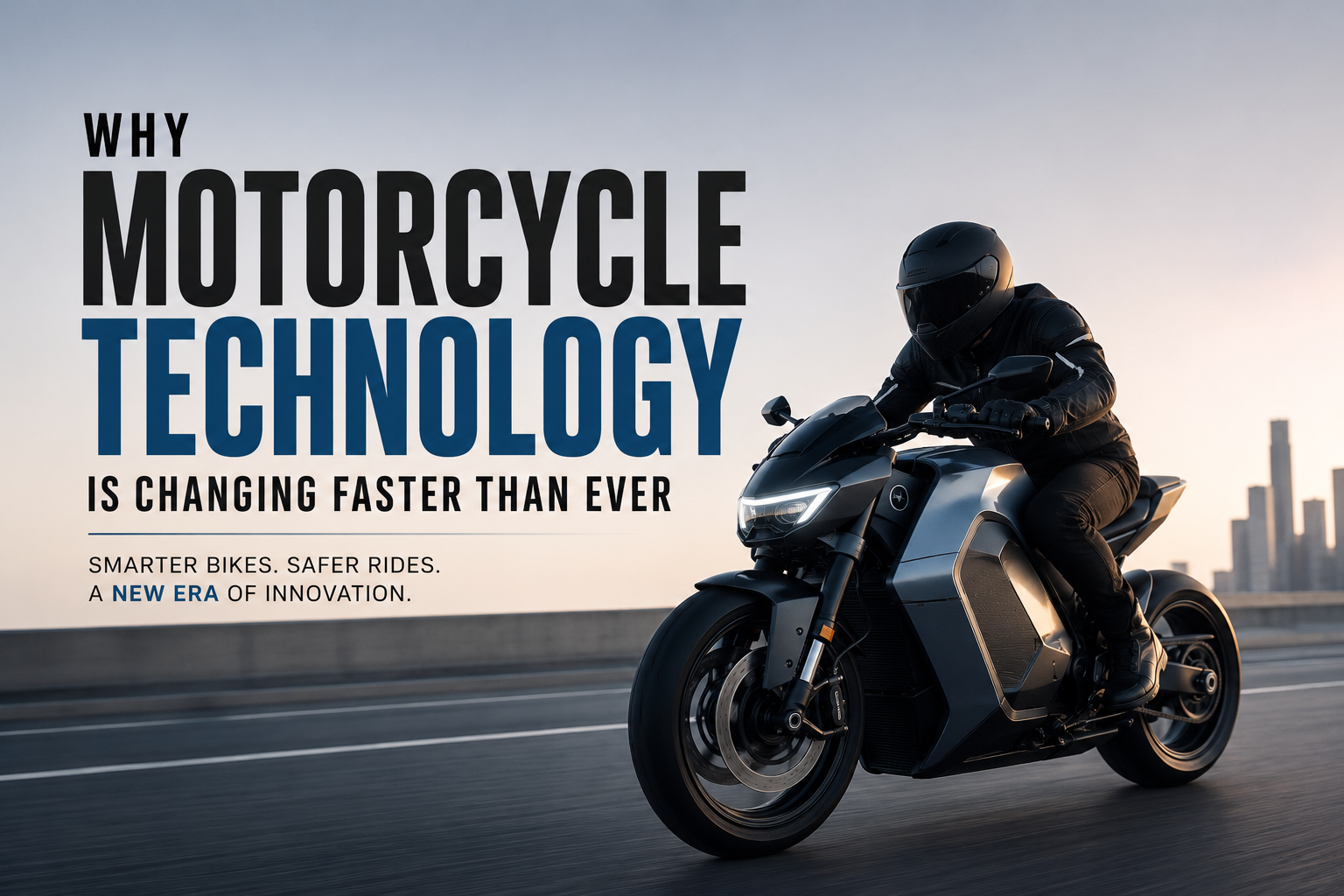
A New Era of Innovation
For decades, motorcycle development focused primarily on engine performance, weight reduction, and handling.
Today, the focus is expanding.
Manufacturers are investing heavily in:
Electrification
Rider-assist systems
Connectivity and smart features
New drivetrain technologies
The result is a new generation of motorcycles that feel fundamentally different from those of just a few years ago.
The Rise of Electric Motorcycles
Electric motorcycles are no longer experimental.
Major manufacturers are now entering the space with serious intent, introducing models with improved range, fast-charging capabilities, and modern design.
Companies like Honda are developing full-size electric platforms, while newer brands are pushing boundaries with advanced battery technologies (Source: industry reporting, Verge Motorcycles).
These developments are beginning to address long-standing concerns around range and usability — two of the biggest barriers to adoption.
Smarter, More Accessible Riding
Technology is also making motorcycles easier to ride.
Systems like Honda’s E-Clutch allow riders to shift gears without using a traditional clutch lever, while still maintaining manual control (Source: Powersports Business).
At the same time, advanced rider aids — including traction control, cornering ABS, and multiple riding modes — are becoming standard across more segments.
This shift is lowering the barrier to entry for new riders, while also improving safety and comfort for experienced ones.
Performance Is Being Redefined
Performance in motorcycling is no longer just about top speed or horsepower.
New technologies are changing how performance is experienced.
For example:
Electronic suspension systems adjust in real time
Ride-by-wire throttles offer more precise control
Data-driven tuning allows bikes to adapt to conditions
Even traditionally unexpected segments, like bagger motorcycles, are being pushed into performance territory through racing and development (Source: MotoGP coverage and industry trends).
The Role of Connectivity
Modern motorcycles are becoming increasingly connected.
Many new models now offer:
Smartphone integration
Navigation systems
Ride data tracking
These features are bringing motorcycles closer to the digital ecosystems riders are already used to in cars and everyday life.
Why This Is Happening Now
Several factors are driving this rapid acceleration in technology:
Increased competition across global markets
Pressure to attract younger riders
Environmental regulations pushing electrification
Advances in battery and electronic systems
Together, these forces are reshaping how motorcycles are designed, built, and used.
A Changing Rider Experience
Perhaps the most important shift is how riders interact with their motorcycles.
Motorcycles are becoming:
More adaptable
More user-friendly
More integrated into daily life
This is changing expectations — especially among newer riders, who may prioritize usability and technology alongside performance.
What This Means for the Future
As technology continues to evolve, the definition of a motorcycle is expanding.
We are likely to see:
Wider adoption of electric platforms
More hybrid-style systems
Increased personalization through software
Greater overlap between motorcycles and other forms of mobility
At the same time, the core appeal of motorcycling — freedom, control, and connection to the ride — remains unchanged.
Final Thoughts
Motorcycle technology is evolving faster than ever — but not at the expense of what makes riding unique.
Instead, it’s expanding what motorcycles can be.
In 2026, the industry is no longer defined solely by tradition or performance — but by its ability to adapt to a new generation of riders and a rapidly changing world.
Sources
Verge Motorcycles — battery technology developments
Powersports Business — Honda E-Clutch system
Industry coverage and MotoGP-related reporting