
What Are Tariffs?
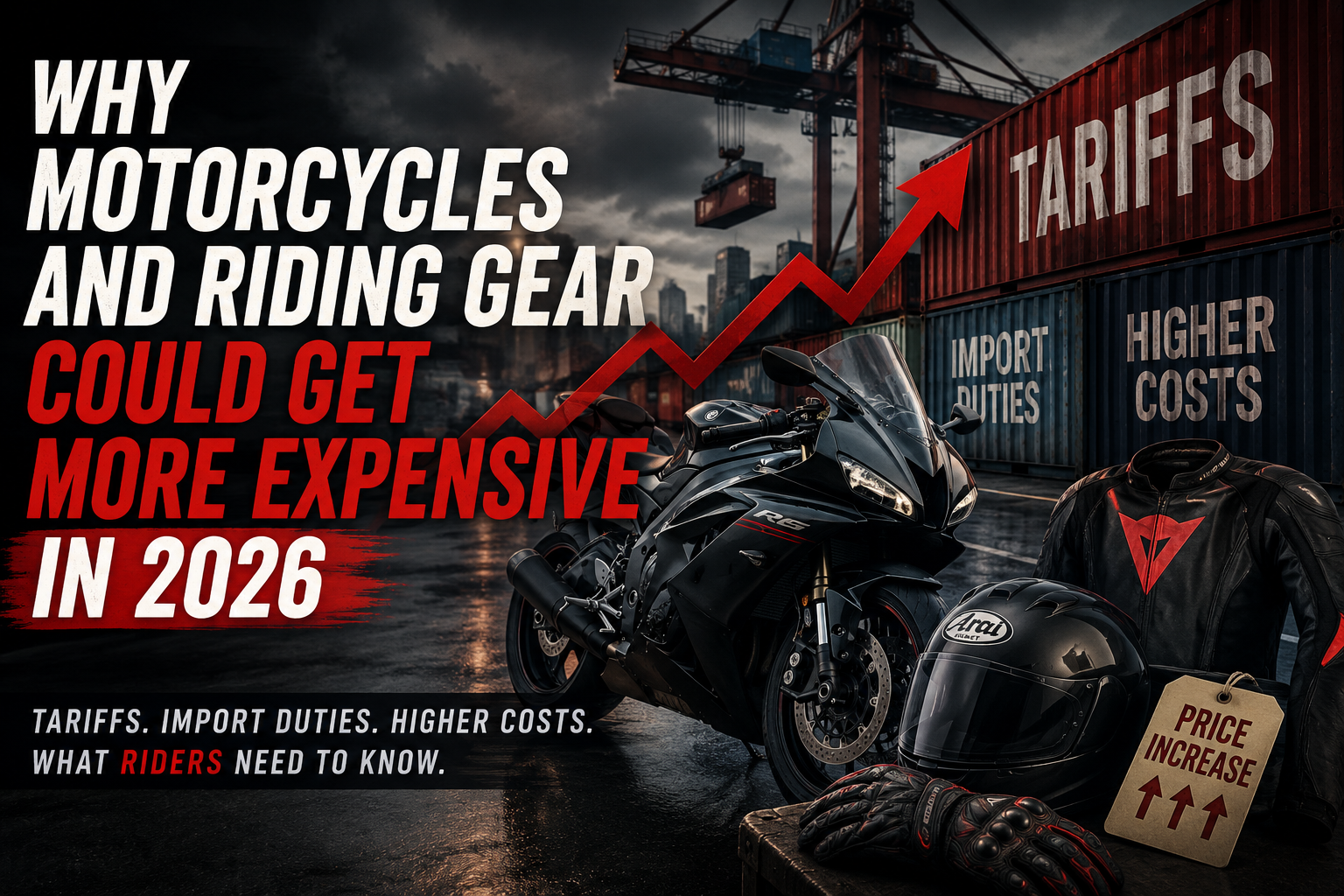
Tariffs are taxes imposed on imported goods.
When governments introduce or increase tariffs on motorcycles, components, or apparel, those costs are often passed through the supply chain and ultimately reflected in the price consumers pay.
Motorcycling is especially exposed to these changes because the industry is deeply global.
A motorcycle sold in Europe or North America may be assembled in Japan, fitted with electronics from Germany, suspension components from Austria, and riding gear manufactured in China, Vietnam, or Thailand.
When any part of that international supply chain becomes more expensive, prices tend to rise.
According to recent reporting from Web Bike World, tariffs and import duties are increasingly affecting the cost structure of both motorcycles and riding equipment, adding pressure at a time when the industry is already facing higher production costs and regulatory demands.
Why Motorcycle Prices Are Rising
Tariffs are only one part of the equation, but they can have a meaningful effect.
Manufacturers typically have three choices when import costs increase:
They can absorb the additional cost and accept lower profit margins, they can reduce specification or equipment levels, or they can pass the higher costs directly to customers.
In practice, many brands do some combination of all three.
That means the price of a new motorcycle may rise even if there have been no major changes to the model itself.
Which Motorcycle Brands Could Be Affected?
Nearly every major motorcycle manufacturer relies on international production and sourcing.
Japanese brands such as Honda, Yamaha, Kawasaki, and Suzuki manufacture motorcycles and components across multiple countries.
European manufacturers including BMW Motorrad, Ducati, KTM, Triumph, and Aprilia also depend on complex global supply chains.
Even American brands like Harley-Davidson and Indian Motorcycle source parts and materials internationally.
In short, very few motorcycles are built entirely within a single country.
That makes the entire industry vulnerable to changes in tariffs and trade policy.
Riding Gear Prices Are Under Pressure Too
Motorcycle gear may be even more exposed than motorcycles themselves.
Many of the world’s leading helmets, jackets, gloves, and boots are produced in Asia, where a large percentage of global manufacturing takes place.
If import duties increase, retailers must either absorb the cost or raise prices.
For riders, this could mean higher prices for premium helmets from brands like Shoei, Arai, AGV, and Schuberth, as well as technical riding apparel that uses advanced materials such as Gore-Tex, Dyneema, and Kevlar.
A high-end helmet that cost $700 a year ago may cost significantly more if manufacturers and retailers are forced to adjust pricing.
Why This Matters to Riders
The impact is especially important for new riders.
Higher motorcycle and gear prices increase the financial barrier to entry at a time when many manufacturers are trying to attract younger customers.
Experienced riders may also delay upgrades, hold onto gear longer, or become more selective about where they spend money.
The result could be a stronger shift toward value-focused products and more careful purchasing decisions.
The Industry Is Facing Pressure From Multiple Directions
Tariffs are arriving at a challenging time.
Manufacturers are already dealing with stricter emissions regulations, investment in electric motorcycles, and rising development costs related to electronics and rider-assistance systems.
Honda recently reported weaker financial results and cited broader market pressures, while Harley-Davidson has also emphasized the importance of affordability as it seeks to attract a new generation of riders.
Against that backdrop, additional import costs are unwelcome.
What Riders Can Do
While riders cannot control global trade policy, they can make smarter purchasing decisions.
Buying previous-year models, shopping seasonal sales, and investing in durable gear that will last for years can help offset rising costs.
It may also be worth considering lesser-known brands that offer strong safety certifications and quality materials at more competitive prices.
Could This Benefit Smaller Brands?
Interestingly, higher prices from major manufacturers may create opportunities for emerging brands.
Companies that can offer competitive pricing and direct-to-consumer sales models may become increasingly attractive as riders look for better value.
This trend could open the door for new gear companies and independent motorcycle brands to gain market share.
Final Thoughts
Tariffs are not the most glamorous topic in motorcycling, but they may become one of the most important economic stories affecting riders in 2026.
From new motorcycles and replacement parts to helmets and protective gear, international trade policy is playing a larger role in determining what riders pay.
The motorcycles and equipment we love are the result of a global supply chain.
When that supply chain becomes more expensive, riders inevitably feel the effects.
Sources
Web Bike World, “Tariffs Continue to Squeeze Rider Purchases as Honda Records First-Ever Losses.”
Reuters reporting on Harley-Davidson’s affordability strategy and market conditions.
Public statements and pricing information from major motorcycle and gear manufacturers.
Prices and trade policies vary by region and may change over time.